Few dishes feel as comforting and nostalgic as a homemade meatloaf simmering gently on the stove. This pan-seared meatloaf recipe brings together rich ground meat, creamy soaked bread, Parmesan cheese, aromatic garlic, and herbs into one incredibly juicy and flavorful dish.
Unlike traditional oven-baked meatloaf, this version is cooked entirely in a pan, giving it a beautifully golden crust while locking in moisture through slow, covered cooking. The result is a tender, sliceable meatloaf that stays juicy from edge to center.
This recipe is inspired by classic grandmother-style cooking techniques, where simple ingredients and slow stovetop methods were used to create deeply flavorful meals without fancy equipment. It’s a rustic, comforting dish perfect for family dinners, Sunday lunches, or cozy weeknight meals.
What makes this skillet meatloaf especially unique is its “grandma’s trick” — soaking stale bread in milk before mixing it into the meat. This small but powerful step transforms the texture, making the meatloaf soft, moist, and never dry.
Whether you are searching for easy stovetop meatloaf recipes, pan-fried meat dishes, or traditional comfort food ideas, this recipe delivers rich flavor, tender texture, and homemade warmth in every slice.
Why This Pan-Cooked Meatloaf Recipe Works So Well
Meatloaf is a classic dish in many cuisines, but cooking it in a pan instead of an oven adds a completely different level of flavor and texture.
Here’s why this method stands out:
1. Ultra Moist and Tender Texture
Slow cooking in a covered pan traps steam, keeping the meatloaf soft and juicy.
2. Rich Golden Crust
Pan-searing the meatloaf before slow cooking creates a flavorful browned exterior.
3. One-Pan Convenience
Everything cooks in a single skillet, making cleanup quick and easy.
4. Deep Homemade Flavor
Slow simmering in broth enhances every ingredient and creates a rich, savory aroma.
5. No Oven Required
Perfect for small kitchens, hot weather cooking, or when you want simple stovetop meals.
The Secret Behind Grandma’s Perfect Meatloaf Texture
The key to this recipe’s success lies in a simple traditional technique: soaking stale bread in milk.
This method, often used in old-fashioned European cooking, creates what chefs call a “panade.”
What Is a Panade?
A panade is a mixture of bread and liquid that:
- Locks moisture into the meat
- Prevents dryness
- Creates a soft, tender texture
- Helps bind ingredients together
When combined with minced meat, it produces a light and juicy meatloaf instead of a dense or dry one.
Choosing the Best Meat Blend for Juicy Meatloaf
This recipe uses a combination of beef and pork, which is ideal for flavor and texture.
Beef
Beef provides:
- Deep, rich flavor
- Firm structure
- Savory base
Pork
Pork adds:
- Natural fat
- Moisture
- Tenderness
The combination ensures a balanced meatloaf that is both flavorful and juicy.
Why Parmesan Cheese Enhances Flavor
Grated Parmesan cheese adds:
- Umami richness
- Slight saltiness
- Depth of flavor
- Slight nutty notes
It blends into the meat mixture and enhances the savory profile of the dish.
Aromatics That Build Flavor
Garlic
Garlic adds warmth and depth, enhancing the savory profile.
Parsley
Fresh parsley provides brightness and freshness that balances the richness.
Nutmeg
A small pinch of nutmeg adds subtle warmth and complexity, a classic ingredient in traditional meat dishes.
Why Eggs and Milk Matter in Meatloaf
Eggs
Eggs act as a binding agent, holding everything together during cooking.
Milk
Milk softens the bread and adds moisture to the mixture, ensuring a tender texture.
Together, they create a smooth, cohesive meat mixture.
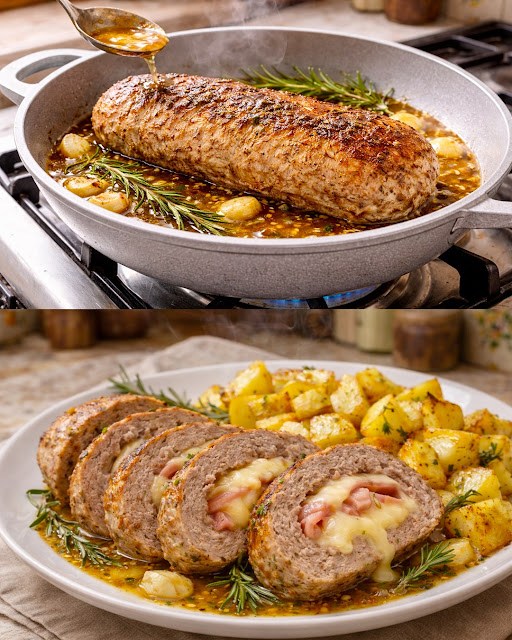
The Optional Stuffed Meatloaf Twist
One of the most delicious variations of this recipe is stuffing the meatloaf with ham and cheese.
Ham
Adds saltiness and savory depth.
Cheese (Scamorza or Provola)
Melts inside the meatloaf, creating a creamy, gooey center.
When sliced, the cheese creates a beautiful, restaurant-style presentation.
The Importance of Pan Searing First
Before slow cooking, the meatloaf is browned in a pan with olive oil.
This step:
- Locks in juices
- Builds flavor through caramelization
- Creates a golden crust
- Improves texture
Skipping this step would reduce flavor depth significantly.
Slow Cooking with Broth – The Key to Juicy Meatloaf
After browning, vegetable broth or water is added to the pan.
Then the meatloaf is covered and gently simmered.
This method:
- Keeps moisture inside
- Prevents burning
- Creates a soft cooking environment
- Enhances flavor absorption
Slow heat is essential for tender results.
Why Turning the Meatloaf Matters
Halfway through cooking, the meatloaf is gently turned.
This ensures:
- Even cooking
- Balanced moisture
- Uniform browning
Care must be taken to avoid breaking the loaf.
The Role of Resting Before Slicing
Resting the meatloaf after cooking is essential.
It allows:
- Juices to redistribute
- Structure to stabilize
- Cleaner slices
Cutting too early may cause it to fall apart.
Flavor Enhancements and Variations
This skillet meatloaf recipe is highly customizable.
White Wine Deglaze Upgrade
Before adding broth, a splash of white wine can be used to deglaze the pan and intensify flavor.
Vegetable Base Option
Carrots, onions, or celery can be added to the pan for extra depth.
Lean Meat Version
Turkey or chicken mince can be used for a lighter variation.
Spicy Version
Add chili flakes or black pepper for heat.
Herb Boost
Add oregano, thyme, or rosemary for a more aromatic profile.
Best Side Dishes for Meatloaf
This skillet meatloaf pairs well with classic comfort sides such as:
- Mashed potatoes
- Roasted vegetables
- Steamed green beans
- Buttered peas
- Fresh garden salad
- Crusty bread
The rich sauce from the pan can also be spooned over sides for extra flavor.
Why This Recipe Is Perfect for Family Meals
This meatloaf is ideal for:
- Family dinners
- Weekend meals
- Comfort food cravings
- Budget-friendly cooking
- Traditional home cooking
It serves multiple portions and reheats well.
Storage and Reheating Tips
Refrigerator Storage
Store sliced meatloaf in airtight containers for up to 3 days.
Reheating
Reheat gently in a pan with a splash of broth to keep moisture.
Freezing
Freeze cooked slices for up to 2 months.
Common Mistakes to Avoid
Overmixing
Overmixing can make meatloaf dense and tough.
Skipping Bread Soak
Dry bread leads to dry meatloaf.
Cooking on High Heat
High heat can burn the outside before the inside cooks.
Cutting Too Soon
This causes the meatloaf to fall apart.
Why This Recipe Feels Like Traditional Home Cooking
This dish reflects old-fashioned cooking values:
- Simple ingredients
- Slow cooking
- No waste (using stale bread)
- Deep, comforting flavor
It’s the kind of recipe passed down through generations.
Final Thoughts
This pan-fried skillet meatloaf is a true comfort food classic made with simple ingredients and traditional cooking techniques. The combination of beef and pork, soaked bread, Parmesan cheese, and slow pan cooking creates a juicy, flavorful, and tender meatloaf that feels homemade in the best possible way.
The golden crust, rich aroma, and soft interior make it a perfect family meal that brings warmth to the table. Whether served for a weekday dinner or a cozy weekend meal, this recipe delivers satisfying flavor and nostalgic comfort in every slice.
Once you try this stovetop method, you may never go back to oven-baked meatloaf again.
Part 2: Simple Recipe Card
Skillet Pan-Fried Meatloaf Recipe (Grandma’s Style)
Ingredients
- 500 g mixed minced meat (beef and pork)
- 2 slices stale bread
- 100 ml milk
- 1 egg
- 50 g grated Parmesan cheese
- 1 clove garlic, minced
- Fresh parsley, chopped (to taste)
- Salt and black pepper (to taste)
- Nutmeg (to taste)
- 100 g cooked ham (optional)
- 100 g sliced cheese (optional – scamorza or provola)
- Extra virgin olive oil (as needed)
- 1 glass vegetable broth or water
Instructions
Step 1: Soak Bread
Soak stale bread in milk until soft. Squeeze and crumble into a bowl.
Step 2: Mix Meat Mixture
Add minced meat, egg, Parmesan, garlic, parsley, nutmeg, salt, and pepper. Mix well.
Step 3: Shape Meatloaf
Shape mixture into a loaf. Add ham and cheese inside if using.
Step 4: Brown in Pan
Heat olive oil in a pan and brown meatloaf on all sides.
Step 5: Slow Cook
Add vegetable broth, cover, and cook on low heat for 40–45 minutes, turning halfway.
Step 6: Rest and Serve
Let rest for a few minutes, slice, and serve warm.
Tips
- Don’t skip soaking bread for softness
- Cook slowly for best texture
- Use lid to keep moisture in
- Rest before slicing